
Data teams use SQLInfo to understand, trust, and document the data they work with from raw tables to business metrics.
Whether you’re building dashboards, defining KPIs, or training machine learning models, unclear data definitions and hidden dependencies slow everything down. SQLInfo provides a shared, searchable data dictionary that makes tables, columns, and metrics easy to understand and easy to trust.
With SQLInfo, data analysts and analytics engineers can find any table or field in seconds, understand how metrics are built, and trace data back to its source without guesswork.
Find the right data instantly
Instead of asking around or reverse-engineering SQL queries, data teams can:
- Search any table, column, or metric in one second
- Understand its definition, usage, and dependencies
- Confidently reuse existing data instead of rebuilding it
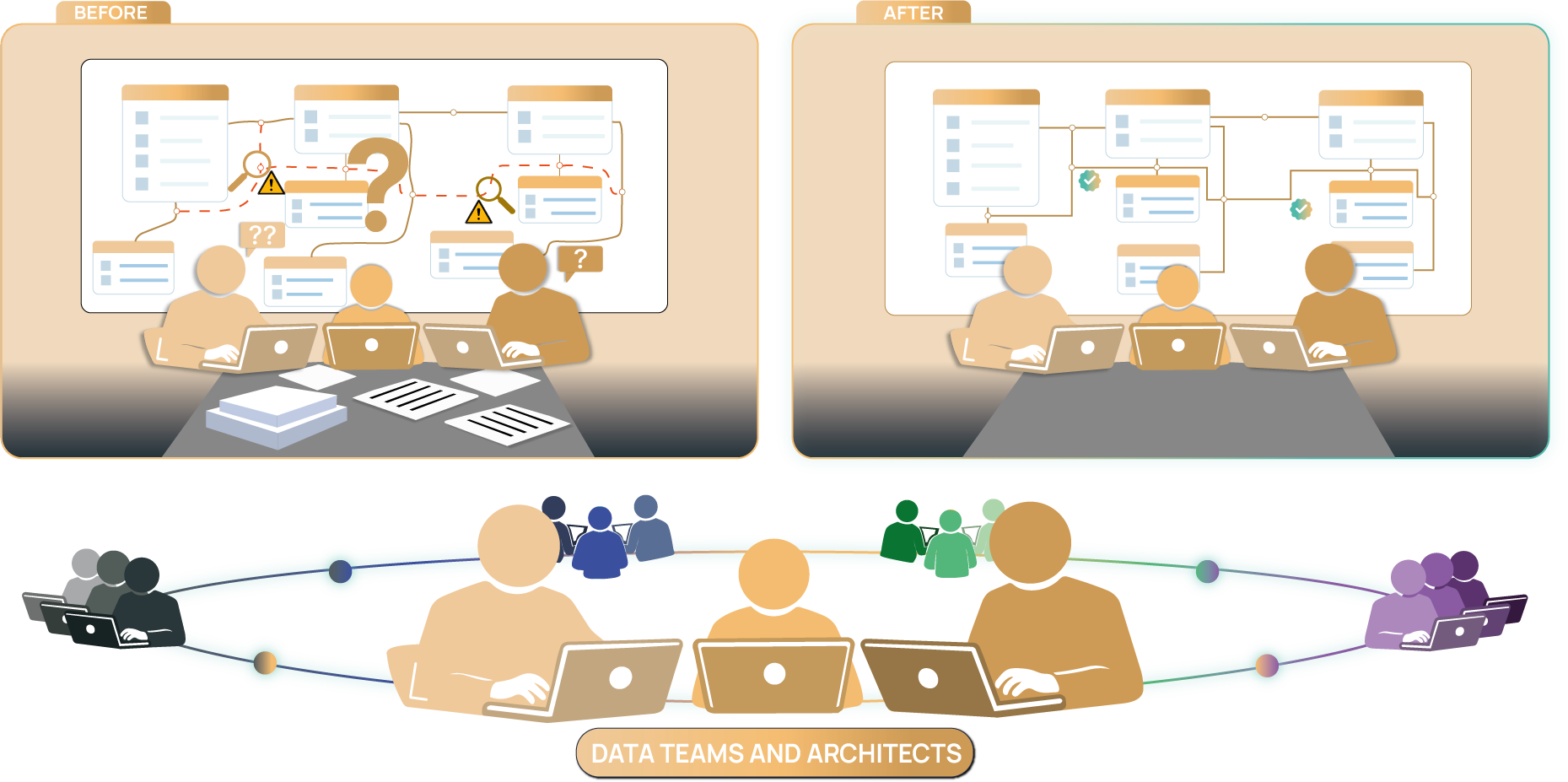
Key benefits for data teams
- Faster understanding of datasets and metrics
Instant visibility into tables, joins, and transformations used in analytics models.
- Clear definitions for tables, fields, and KPIs
A shared source of truth for business terms, metrics, and data logic.
- Reliable data lineage
Trace metrics and dashboards back to their underlying tables and columns.
- Increased trust in analytics
Reduce inconsistencies and confusion across dashboards, reports, and models.
- Better collaboration between data and engineering
Speak the same language when discussing data structures and changes.
The result
With SQLInfo, data teams will:
- Build dashboards faster
- Trust their metrics
- Reduce rework and duplication
- Align business and technical teams
SQLInfo helps data teams move from raw data to reliable insights with confidence.
Database architects use SQLInfo to design, document, and maintain complex database architectures with a clear, centralized view of the system.
As schemas grow and evolve, keeping documentation accurate and consistent becomes increasingly difficult. SQLInfo ensures that architectural decisions, relationships, and constraints are clearly documented, searchable, and always up to date.
With SQLInfo , architects can find any table, relationship, or constraint in seconds, understand dependencies instantly, and evaluate the impact of design changes before they happen.
Full visibility into schema structure
Instead of relying on outdated diagrams or manual documentation, architects can:
- Explore the full schema visually and through search
- Understand dependencies across domains and services
- Identify risks and inconsistencies early
Key benefits for database architects
- Clear visualization of complex schemas
Understand how tables, keys, and relationships fit together even at scale.
- Documented design decisions and rules
Capture business logic, constraints, and architectural choices in one place.
- Consistent standards across the database
Enforce naming conventions, patterns, and best practices.
- Safer schema evolution
Anticipate the impact of changes before deploying them to production.
- Reduced technical debt
Keep documentation aligned with reality as the database evolves.
The result
With SQLInfo, database architects can:
- Maintain long-term schema clarity
- Reduce architectural risk
- Improve collaboration with developers and data teams
- Keep complex systems understandable
SQLInfo gives architects the visibility and control they need to design databases that scale.